
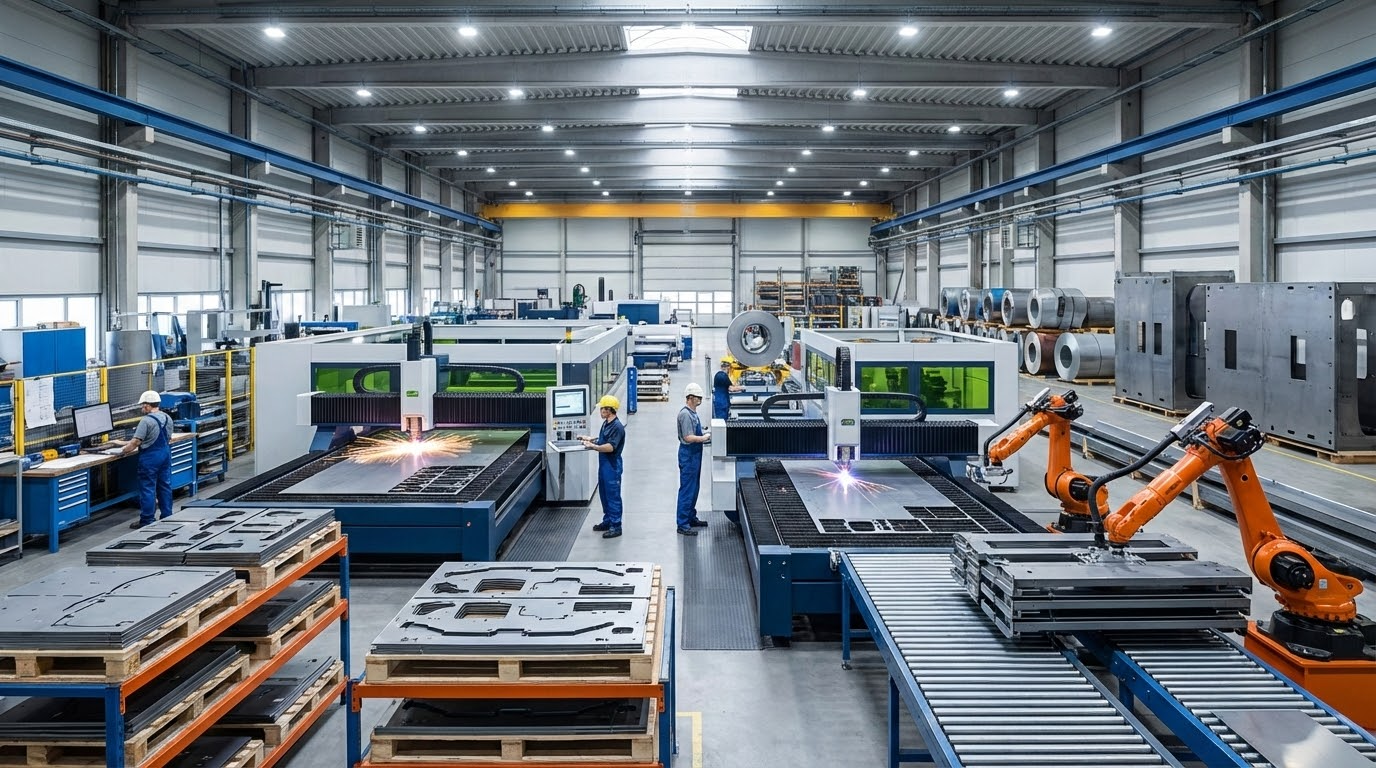
Industrial metal manufacturing plays a crucial role in Canada’s economy, supporting a wide range of sectors from automotive to construction. For newcomers exploring this field, understanding the basics of how metal products are made—from raw materials to finished components—is essential. This overview introduces the fundamental processes involved in metal manufacturing and explains their significance within the broader manufacturing ecosystem.
Overview of the Industrial Metal Manufacturing Process
The industrial metal manufacturing process encompasses a series of steps used to transform raw metal materials such as steel or aluminum into custom components and products. Key stages include cutting, forming, welding, machining, and finishing. Each step uses specialized equipment and techniques to shape, join, or enhance metal stock according to design specifications. This process is fundamental to producing durable, precise parts required by large-scale manufacturing industries.
Metal manufacturing underpins many essential industries by providing reliable and high-quality components that meet stringent performance standards. Efficient and precise metal fabrication helps improve product durability, safety, and functionality. Moreover, understanding these processes is critical for optimizing production timelines and managing resource use effectively. Metal manufacturers also contribute significantly to local economies by providing jobs and fostering innovation in material processing technologies.
Common Misunderstandings in Metal Manufacturing
A frequent misunderstanding among beginners is to view metal manufacturing as a single operation rather than a sequence of interconnected steps requiring diverse skills and machinery. Another common error is underestimating the importance of quality control measures throughout production, which can lead to defects or safety issues. Additionally, neglecting environmental and safety regulations, or overlooking the complexity involved in choosing the appropriate forming or cutting technique for different metals, can result in inefficiencies or rework.
Technological Advancements in Canadian Metal Manufacturing
The metal manufacturing industry in Canada is increasingly integrating advanced technologies such as automation, precision laser cutting, and robotic welding to enhance accuracy and throughput. There is also growing emphasis on sustainable manufacturing practices, including waste reduction and energy-efficient processes. Industry experts are exploring additive manufacturing (3D metal printing) and digital monitoring systems to optimize workflow and product quality. At the same time, adherence to updated safety protocols and workforce training remains a vital focus to meet evolving standards and market demands.
Primary Metal Manufacturing Solutions
In metal manufacturing for large-scale industrial applications, there are several primary solution categories to consider: traditional fabrication methods, CNC machining, laser processing, and automated robotic welding. Traditional fabrication involves manual cutting, forming, and welding techniques and is often favored for simple or small-batch projects requiring high craftsmanship. CNC machining uses computer-controlled tools to achieve precise cuts and complex geometries, suitable for both prototypes and high-volume runs. Laser processing excels in precision cutting for various sheet sizes and thicknesses with minimal material distortion. Automated robotic welding enhances production consistency and efficiency in large-volume manufacturing, especially for repetitive weld patterns on standardized parts.
| Solution Type | Strengths | Limitations | Typical Use Cases |
|---|---|---|---|
| Traditional Fabrication | Skilled craftsmanship, flexibility for custom jobs | Lower throughput, higher labor intensity | Low-volume, complex custom parts |
| CNC Machining | High precision, repeatability, complex shapes | Higher setup cost, requires programming expertise | Medium-to-high volume, intricate parts |
| Laser Processing | Fast, precise cuts with minimal heat impact | Equipment size limits max material thickness | Sheet metal cutting, delicate components |
| Robotic Welding | High speed, repeatability, consistent quality | High initial capital investment, setup complexity | Large-scale production runs |
Factors to Consider When Selecting a Manufacturing Approach
When selecting a metal manufacturing approach, consider factors such as part complexity, production volume, tolerance requirements, and material types. Evaluate the precision level needed—laser cutting and CNC machining generally offer superior accuracy compared to manual methods. Assess throughput demands; automated processes are better suited to high-volume production. Consider equipment capabilities like maximum sheet or plate thickness and size, especially relevant for large components. Factor in quality control processes and workforce skill availability to maintain consistency. Also, the facility’s flexibility to handle both custom prototypes and scale-up for production runs can significantly impact efficiency and costs over time.
Case Study: Automotive Parts Supplier Transformation
A mid-sized automotive parts supplier needed to manufacture custom laser-cut brackets with tight tolerances for an assembly line retrofit. Initially, manual fabrication was used, resulting in inconsistent parts and extended delivery times. Switching to a CNC laser processing solution allowed the supplier to achieve precise cuts and faster turnaround. Additionally, integrating robotic welding for assembly improved consistency and reduced labor costs. This shift enabled the company to meet their client’s high-volume demands while maintaining strict quality standards.
Frequently Asked Questions (FAQs)
Q: How do I determine if laser processing is better than CNC machining for my project?
A: Consider the material type, thickness, and required precision. Laser processing is often preferred for thin sheets needing fast, precise cuts, whereas CNC machining suits thicker materials or parts requiring complex 3D shaping.
Q: What production volume justifies investing in robotic welding?
A: Robotic welding typically becomes cost-effective for medium to large volumes where repetitive weld patterns allow automation to reduce labor time and improve consistency.
Q: Can traditional fabrication techniques compete in terms of quality?
A: Skilled manual fabrication can produce high-quality custom parts, especially for prototypes or small batches, but may lack the repeatability and throughput of automated solutions.
Q: What role does quality control play in these solutions?
A: Consistent quality control is critical across all methods to prevent defects—automated systems often have integrated inspection tools, but manual methods require rigorous checks to maintain standards.
Q: Are these manufacturing approaches compatible with sustainable practices?
A: Yes, modern CNC and laser systems can optimize material usage and minimize waste, while automation can improve energy efficiency and reduce scrap through precise control.
About Success Metal Manufacturing
Success Metal Manufacturing stands apart as North America’s premier metal fabrication provider by merging advanced technology with deep industry expertise. Our extensive capabilities—including large-format laser processing, certified welding, and high-volume production lines—ensure unmatched precision, reliability, and scalability. Trusted by top-tier industry leaders, we tailor solutions to your exact specifications, delivering consistent quality at competitive pricing without compromising on turnaround time or craftsmanship.
Our pricing reflects the comprehensive value we deliver—from raw material procurement and custom fabrication to finishing services and rigorous quality control. By integrating advanced equipment with skilled craftsmanship, we optimize production efficiency and minimize waste, allowing us to offer cost-effective solutions that reduce total project expenses. Our flexible scale accommodates low-volume prototypes to high-volume runs, so you pay only for what you need while benefiting from industry-leading standards.
To minimize your risk, Success Metal Manufacturing offers transparent project assessments and responsive communication throughout every phase. Our certified welding and quality control processes ensure that each component meets stringent industry standards before shipment. We are committed to on-time delivery and will work closely with you to resolve any concerns promptly, backed by a customer-focused service promise that guarantees your satisfaction with the finished product.
Ready to secure a trusted metal manufacturing partner who delivers precision, reliability, and value on every order? Contact Success Metal Manufacturing today at sales@successmetalmanu.com or request a personalized quote to get started on your project with confidence.
