

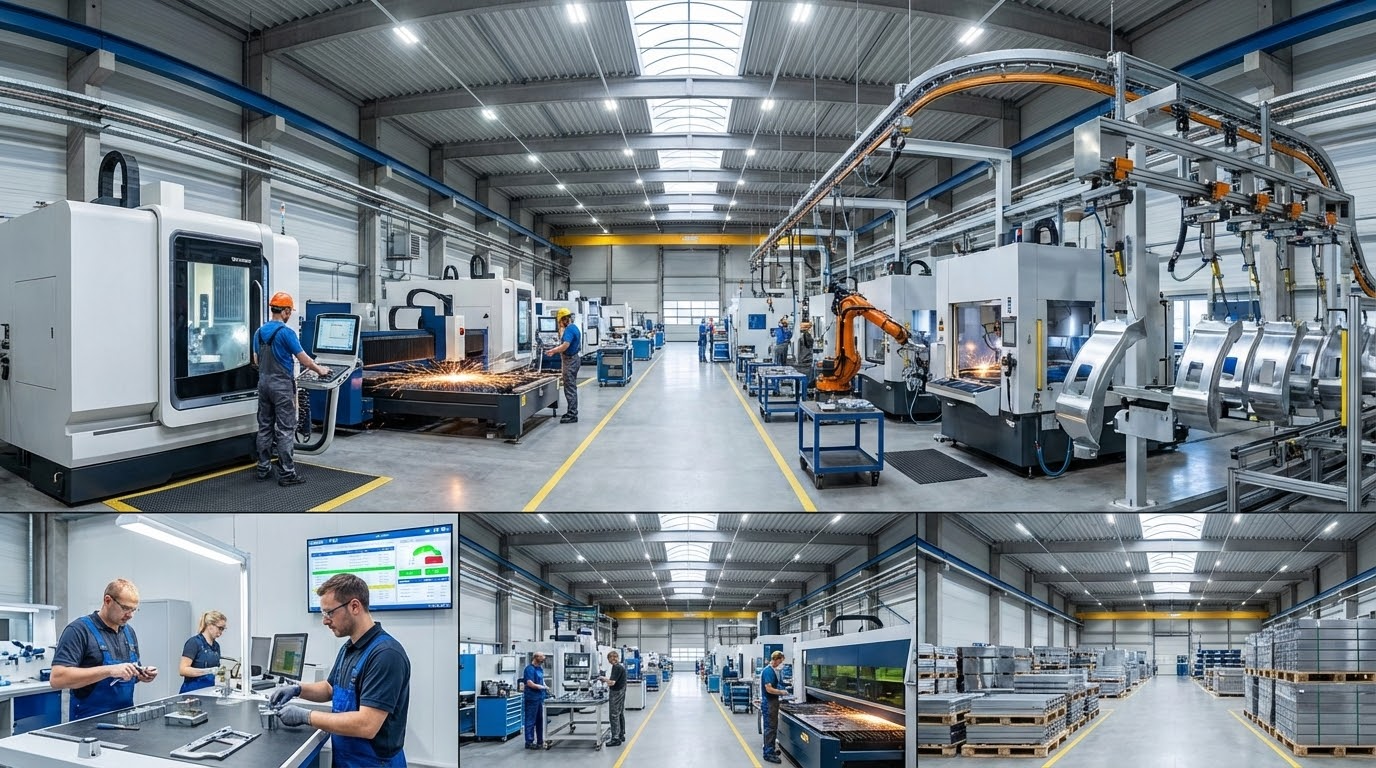
When exploring industrial metal manufacturing, one of the main concerns for businesses is the time it takes to receive completed metal parts or products. Lead times—the total duration from ordering to delivery—play a crucial role in planning production schedules and managing costs. Understanding what factors contribute to these timelines is essential for anyone new to manufacturing or supply chain management.
Lead time in industrial metal manufacturing refers to the period required to complete a metal product from the initial order through all stages, including material procurement, fabrication, finishing, and delivery. It encompasses preparation steps like design finalization, cutting, forming, welding, quality control, and shipping. Each step adds time, and the cumulative total defines the overall lead time for a given project.
The length of lead time directly impacts manufacturing efficiency, inventory management, and customer satisfaction. Longer lead times can delay project completion, disrupt supply chains, and increase storage or holding costs. Conversely, shorter lead times help improve responsiveness to market demands and reduce operational expenses. Understanding these timings aids businesses in scheduling, budgeting, and making informed decisions throughout the production process.
Beginners often assume lead times are fixed or uniform across all metal manufacturing processes, not accounting for variations due to material type, order complexity, or production scale. Another common misunderstanding is overlooking external factors like supply chain delays or regulatory compliance that extend lead times. Additionally, lack of communication with manufacturers about realistic timelines can lead to unrealistic expectations and project setbacks.
Advancements in manufacturing technologies, such as automation, CNC machining, and AI-driven scheduling systems, are gradually reducing lead times by enhancing production speed and accuracy. Increasing supply chain digitization and predictive analytics help forecast delays and optimize workflows. At the same time, global challenges like raw material shortages and regulatory requirements continue to influence lead time variability, making transparency and proactive management essential for modern metal manufacturing operations.
Types of Solutions Influencing Lead Times
In industrial metal manufacturing, lead times can be influenced by distinct solution types based on fabrication methods and production scales. Broadly, these include:
- Custom One-off Fabrication: Tailored for bespoke components requiring detailed design, complex forming, and specialized finishing. This type prioritizes precision and customization but often involves longer lead times due to setup and iteration.
- High-Volume Manufacturing: Optimized for large runs of standardized metal parts, leveraging automated processes and streamlined workflows. This approach reduces per-unit lead time but assumes less product variation.
- Hybrid Manufacturing: Combines batch runs with elements of customization, using flexible equipment such as CNC machining and laser processing that can adapt rapidly to varied specifications with moderate lead times.
- Outsourced vs. Integrated Supply Chains: Lead times also vary depending on whether manufacturers control end-to-end processes internally or rely on external suppliers for raw materials or finishing, influencing coordination complexity and speed.
Comparison of Solution Types
| Solution Type | Key Characteristics | Lead Time Impact | Advantages | Limitations |
|---|---|---|---|---|
| Custom One-off Fabrication | Detailed design, manual adjustments | Longer due to setup, prototyping, and QC | High precision and customization | Slower, potentially higher variability |
| High-Volume Manufacturing | Automated, repeatable processes | Shorter due to economies of scale and workflow | Cost efficiency, faster throughput | Less flexibility for design changes |
| Hybrid Manufacturing | Flexible CNC and laser processing | Moderate, balances customization and speed | Adaptable to varied orders, responsive | Requires skilled operators, still setup involved |
| Integrated Supply Chain | Vertical integration of processes | Potentially shortest with internal control | Improved communication and schedule predictability | Requires capital investment, complexity in management |
| Outsourced Components | Reliance on external vendors | Variable, depends on vendor coordination | Access to specialized capabilities | Risk of delays and communication gaps |
Factors to Consider for Lead Time Evaluation
When evaluating metal manufacturing options for lead time considerations, businesses should assess:
- Order Complexity: Degree of customization, precision needed, and whether prototyping or revisions are expected.
- Production Volume: Smaller runs naturally incur longer per-unit times versus continuous large runs benefiting from automation.
- Technology and Equipment: Availability of CNC machining, laser cutting, shearing, and forming equipment that can accelerate processing stages.
- Supply Chain Structure: Internal versus outsourced processes and the associated communication and logistical coordination.
- Quality Assurance Processes: Depth of inspection and finishing requirements which can add to timelines but assure reliability.
- Flexibility and Scalability: Ability of the manufacturer to adapt production schedules swiftly in response to demand fluctuations without sacrificing lead time.
- Transparency and Communication: Manufacturers providing detailed scheduling and proactive updates reduce uncertainty in project planning.
Case Study: Midwest Automotive Parts Supplier
A Midwest automotive parts supplier required precision laser-cut base plates with tight tolerances for a new vehicle assembly line. Initially, they debated between a small local shop specializing in custom fabrication and a high-volume manufacturer with laser processing capabilities. The small shop’s lead times extended beyond their target due to manual setup and limited capacity. In contrast, the larger manufacturer’s integrated laser processing and forming equipment enabled them to meet volume and precision requirements with predictable lead times, although the setup required initial design finalization.
This case underscores evaluating both capacity and technology alignment with project timelines.
Common Questions About Lead Times in Metal Manufacturing
Q: How does customization affect lead times in metal manufacturing?
A: Increased customization typically extends lead times because of additional design, setup, and quality checks required.
Q: Can high-volume manufacturing guarantee the shortest lead times?
A: While often faster for standardized parts due to automation, high-volume manufacturing may be less flexible for sudden specification changes.
Q: What role does technology play in reducing lead times?
A: Advanced equipment like CNC and laser cutting improve speed and precision, helping balance lead time and quality.
Q: How important is communication with manufacturers regarding lead times?
A: Crucial; clear, proactive communication helps align expectations and mitigates risks of delays.
Q: When should a company choose integrated supply chain manufacturing over outsourcing?
A: When tight control over scheduling and quality is critical to minimize lead times, although it requires greater resource investment.
Why Choose Success Metal Manufacturing?
Success Metal Manufacturing stands apart as the premier metal fabrication service provider in North America by seamlessly combining advanced technology, certified craftsmanship, and integrated production processes. Our state-of-the-art laser processing and CNC machining capabilities, coupled with certified welders and comprehensive finishing services, enable us to handle orders at any scale with unmatched precision and speed. Our integrated supply chain reduces delays by maintaining full control over fabrication stages, ensuring consistent quality and predictable lead times. Trusted by industry leaders like Mercedes-Benz and Loblaws, we deliver custom metal solutions that not only meet but exceed rigorous manufacturing standards, giving you the confidence to rely on us for mission-critical projects.
Our pricing reflects the exceptional value embedded in every project through efficient high-volume production combined with premium customization options. Unlike providers that either compromise quality or flow, Success Metal Manufacturing leverages optimized workflows and cutting-edge equipment to reduce waste and turnaround times, which translates into cost savings for you without sacrificing excellence. We balance economies of scale with flexible customization, delivering competitively priced custom fabrication and finishing services that justify your investment by reducing rework, minimizing downtime, and supporting just-in-time delivery schedules critical to your operation.
We understand the importance of reliability and predictability in your manufacturing workflows, which is why we offer thorough quality controls at every step, including certified welding inspections, precision laser cutting validation, and comprehensive finishing audits. Our transparent project management provides you with proactive updates and detailed scheduling so you remain informed and confident throughout the process. Additionally, we offer consultation before production to align on specifications and timelines, mitigating risks of costly revisions. This commitment to quality and communication ensures your order is delivered on time and to spec, reducing the risk traditionally associated with custom metal manufacturing.
Ready to partner with a metal fabrication provider that guarantees precision, speed, and dependable delivery? Contact Success Metal Manufacturing today to get a tailored quote or schedule a consultation. Email us at sales@successmetalmanu.com and experience firsthand how our expertise can streamline your production and elevate your product quality. Let’s build your success together—reach out now to secure your project timeline and cost advantages.

